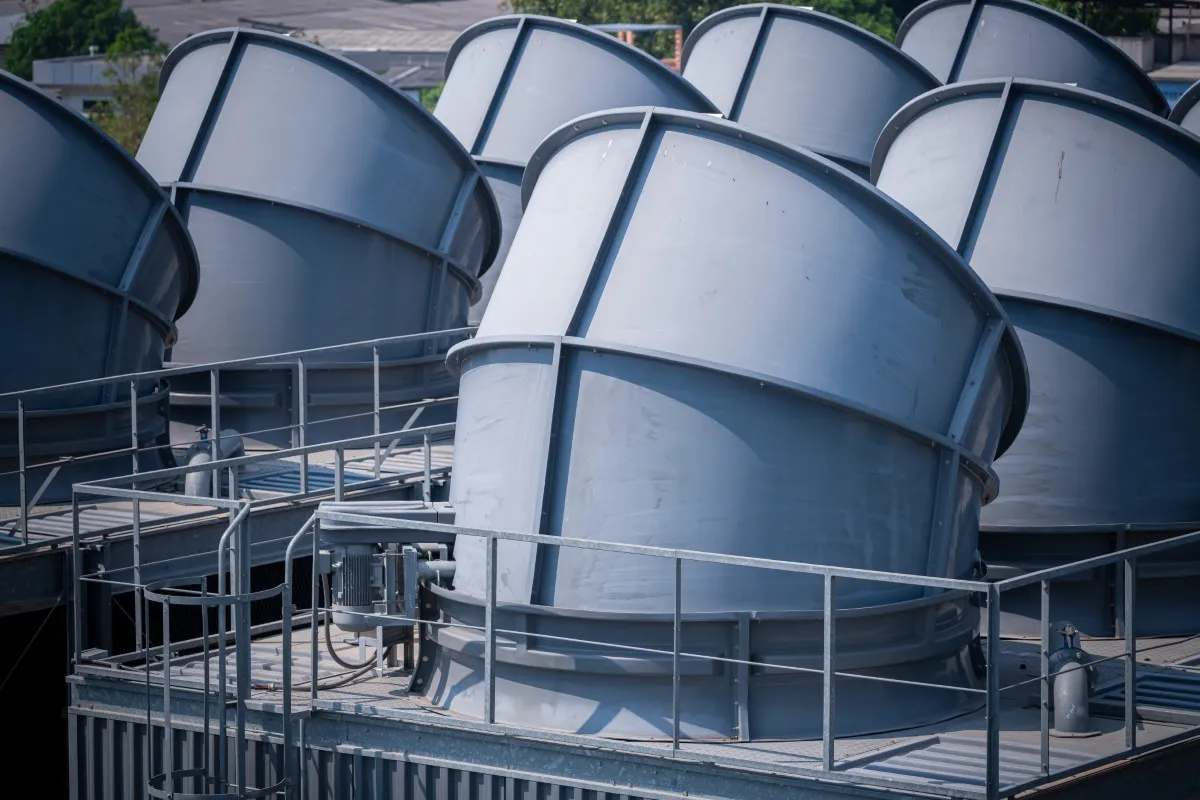
Shipping Large Cooling Towers
Shipping large cooling towers involves managing out-of-gauge (OOG) cargo that exceeds standard container dimensions. Successful project execution starts with selecting the appropriate mode of transport. While sea freight is the primary method for these structures, the choice between Flatrack containers and Breakbulk vessels depends on the unit's final weight and width.
Units that fit the footprint of a container ship use flatracks, while oversized towers require breakbulk ships, in which cargo is loaded individually into the hold or on deck. Our road freight team coordinates the initial move from the factory to the port, ensuring that all low-loader trailers and escort vehicles comply with UK transport laws.
Incoterms 2020: Defining Risk and Cost Boundaries
Technical clarity in the sales contract is vital to prevent unplanned costs. We utilise Incoterms 2020, governed by the International Chamber of Commerce, to define when risk and cost transfer from the seller to the buyer. For cooling tower projects, FCA (Free Carrier) and DAP (Delivered at Place) are the most effective terms. Using these terms ensures clear boundaries for insurance and terminal handling charges.
Customs Compliance and Mandatory Documentation
International customs authorities demand absolute accuracy to avoid customs holds. Every shipment must have a Commercial Invoice, Packing List, and a Certificate of Origin (COO). If the tower contains any hazardous chemical residues or coatings, a Material Safety Data Sheet (MSDS) is mandatory under the International Maritime Dangerous Goods code.
UK exporters must check specific tariff codes and duty rates on the gov.uk trade portal. Our customs clearance team manages these entries to ensure compliance with local VAT and duty regulations, preventing expensive delays at the destination port.
Technical Risk Control: VGM and Insurance
Safety is a legal priority. Under the SOLAS convention, shippers must provide a Verified Gross Mass (VGM) for every unit. This is the total weight of the cooling tower plus all lashing and packing materials. Inaccurate weight reporting can lead to vessel instability and cargo rejection at the terminal.
Risk management also requires robust insurance. Standard carrier liability is often limited by the BIFA Standard Trading Conditions. We recommend comprehensive marine insurance to cover the full replacement value of the tower, protecting against damage during complex crane lifts or heavy weather at sea.
Understanding Cost Drivers: BAF and Demurrage
Logistics costs for heavy lift items fluctuate based on several variables. Shippers must account for the Bunker Adjustment Factor (BAF), which is a fuel surcharge applied by carriers. Other critical cost drivers include:
- Dead Freight: Charges for empty slots on a vessel that cannot be used because of your tower's shape.
- Demurrage: Fees charged when cargo remains in the port beyond the allowed free time.
- Heavy Lift Surcharges: Applied by ports for units exceeding standard crane capacities, often starting at 20 tonnes.
For urgent spare parts or control systems needed during the installation phase, our air freight services provide rapid transit to maintain your project timeline.
Cooling Tower Logistics FAQ
What is the difference between breakbulk and OOG?
Out-of-gauge (OOG) cargo stays on the container network using flatracks or open-top boxes. Breakbulk involves loading the cooling tower as a standalone piece, which is necessary for items that are too heavy or large for container ships.
Why do I need an MSDS for a new cooling tower?
Even new towers may contain protective coatings or anti-corrosive chemicals. Carriers require a Material Safety Data Sheet (MSDS) to classify cargo safely for transport in accordance with international maritime law.
How can I avoid port demurrage fees?
Ensure all documentation is pre-filed with our customs clearance team at least seven days before arrival. This allows us to clear the tower and arrange immediate collection before the terminal's free time expires.
What is a heavy lift transport plan?
This is a technical document that outlines the rigging points, centre of gravity, and lashing methods for the cooling tower. It is required by vessel masters and port authorities to ensure a safe loading process.